

NewsDetails
Application of Alloy Steel Pipe Fittings in Petroleum Industry
author:Kiyama time:2026-04-14 18:52:41 Click:118
Alloy steel pipe fittings play a vital role in the petroleum industry, where piping systems must operate under extreme pressure, high temperature, and highly corrosive environments. From upstream exploration to downstream refining, these fittings ensure safe, reliable, and efficient transport of oil, gas, and related hydrocarbons.
Why Alloy Steel Pipe Fittings Are Used in Petroleum Systems
The petroleum industry presents some of the most demanding operating conditions for piping systems. Alloy steel fittings are preferred because they offer:
High mechanical strength
Excellent resistance to heat and pressure
Improved corrosion and oxidation resistance
Long service life under harsh conditions
Stability in sour gas and chemically aggressive environments
These properties make them suitable for critical pipeline infrastructure.
Key Properties Required in Petroleum Applications
High Temperature Resistance
Refining and processing operations often involve elevated temperatures. Alloy steel maintains structural integrity without deformation or loss of strength.
High Pressure Performance
Pipeline systems in oil and gas transport operate under high internal pressures. Alloy steel fittings provide:
Strong wall integrity
Resistance to bursting and fatigue
Reliable sealing performance in threaded and welded joints
Corrosion and Sulfide Resistance
Petroleum environments often contain:
Hydrogen sulfide (H₂S)
Carbon dioxide (CO₂)
Saline water and chlorides
Alloy steels (especially chromium-molybdenum steels) help resist:
Sulfide stress cracking
Pitting corrosion
General corrosion in wet environments
Common Alloy Steel Grades Used
Chromium-Molybdenum Steel (Cr-Mo Steel)
Widely used in high-temperature and high-pressure systems.
Characteristics:
Excellent creep resistance
Good strength at elevated temperatures
High durability
Typical grades include P11, P22, and P91.
Low-Alloy Steel
Used for general petroleum pipeline systems.
Characteristics:
Balanced strength and toughness
Cost-effective compared to high-alloy steels
Suitable for moderate pressure applications
Stainless Alloy Steel (Special Cases)
In highly corrosive environments, stainless alloy fittings are used.
Characteristics:
Excellent corrosion resistance
Suitable for offshore and chemical exposure conditions
Higher cost but longer service life
Major Applications in the Petroleum Industry
1. Upstream Exploration and Production
Alloy steel fittings are used in:
Wellhead assemblies
Drilling mud systems
High-pressure flowlines
These systems require high strength and resistance to abrasive fluids.
2. Oil and Gas Transmission Pipelines
Used extensively in long-distance pipeline networks:
Elbows, tees, reducers, and couplings
High-pressure welded fittings
Flanged connections for maintenance access
These ensure safe transport over long distances.
3. Refining and Petrochemical Plants
In refineries, alloy steel fittings handle:
High-temperature hydrocarbon processing
Catalytic cracking units
Heat exchangers and reactors
They maintain stability under extreme thermal cycling.
4. Offshore Platforms
Offshore environments are highly corrosive due to saltwater exposure.
Alloy steel fittings are used in:
Subsea pipelines
Riser systems
Offshore processing units
They provide durability in marine conditions.
5. Gas Processing Facilities
Natural gas processing requires resistance to sour gas environments.
Applications include:
Desulfurization units
Compression systems
Gas dehydration pipelines
Alloy steel helps prevent sulfide stress cracking.
Types of Alloy Steel Pipe Fittings Used
Elbows (90° and 45°)
Tees (equal and reducing)
Reducers (concentric and eccentric)
Couplings and unions
Caps and plugs
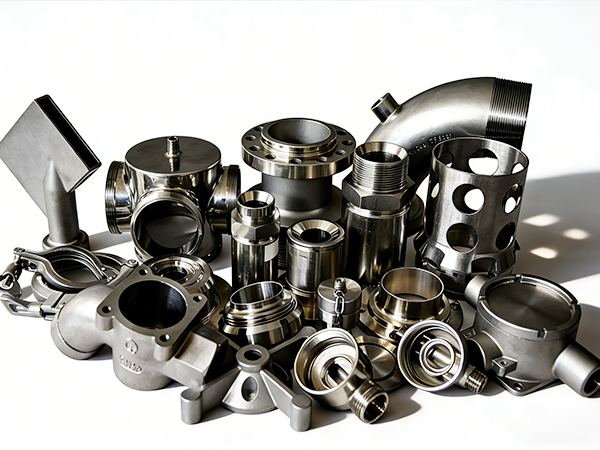
Flanges and forged fittings
Each type is selected based on flow direction, pressure, and maintenance needs.
Advantages in Petroleum Applications
High reliability in extreme environments
Reduced risk of leakage and failure
Extended service life
Compatibility with high-pressure systems
Ability to withstand thermal cycling
These advantages make alloy steel fittings essential for safe petroleum operations.
Challenges and Limitations
Despite their advantages, there are some challenges:
Higher material and manufacturing cost
Need for precise heat treatment control
Potential for corrosion if improperly selected
Requires strict quality inspection and certification
Proper selection and maintenance are essential to overcome these issues.
Industry Standards and Compliance
Alloy steel pipe fittings used in petroleum applications must comply with:
ASME B16.9 (Butt-weld fittings)
ASME B16.11 (Forged fittings)
ASTM A234 (Pipe fittings material specification)
API 6A / API 5L (Oil and gas pipeline standards)
NACE MR0175 (Sour service corrosion resistance)
These standards ensure safety, reliability, and global compatibility.
Conclusion
Alloy steel pipe fittings are indispensable in the petroleum industry due to their superior strength, heat resistance, and corrosion performance. From drilling and extraction to refining and offshore operations, they ensure safe and efficient fluid transport under extreme conditions.
By selecting the appropriate alloy grade and adhering to strict industry standards, petroleum operators can achieve long-term reliability, reduced maintenance costs, and improved system safety.
References
ASME B16.9 – Factory-Made Wrought Buttwelding Fittings
ASTM A234 – Standard Specification for Piping Fittings of Wrought Carbon and Alloy Steel
API 6A – Specification for Wellhead and Christmas Tree Equipment
NACE MR0175 / ISO 15156 – Materials for Use in H₂S-Containing Environments
Callister, W.D. Materials Science and Engineering, Wiley
 Recommended Products
.jpg)
.jpg)
.jpg)
.jpg)
.jpg) Contact us
Contact us
—— Contact:Mr. Meng
—— Tel:+86 18233783692
—— Email:mengfy001@gmail.com
—— Url:https://www.kiyama-pipefitting.com
—— Address:Cangzhou Economic and Technological Development Zone, Cangzhou City, Hebei Province, China