

NewsDetails
Selection of Pipe Fittings for High-Temperature and High-Pressure Environments
author:Kiyama time:2026-04-14 18:56:48 Click:51
Pipe fittings used in high-temperature and high-pressure (HTHP) environments must meet strict requirements for mechanical strength, thermal stability, and corrosion resistance. These conditions are commonly found in industries such as oil & gas, power generation, petrochemical processing, and steam systems. Proper selection of fittings is essential to ensure safety, reliability, and long service life.
Understanding HTHP Operating Conditions
High-temperature and high-pressure environments typically involve:
Temperatures above 200°C (and sometimes exceeding 600°C in power plants)
Pressures ranging from medium to ultra-high pressure systems
Thermal cycling and mechanical stress
Exposure to corrosive media such as steam, hydrocarbons, or chemicals
These extreme conditions significantly increase the risk of creep, fatigue, and material degradation.
Key Requirements for Pipe Fittings in HTHP Systems
High Mechanical Strength
Fittings must withstand internal pressure without deformation or rupture.
High yield strength and tensile strength
Resistance to burst pressure
Stable performance under cyclic loading
Thermal Stability
Materials must maintain structural integrity at elevated temperatures.
Resistance to thermal expansion and distortion
Creep resistance under long-term heat exposure
Stability during rapid temperature changes
Corrosion and Oxidation Resistance
High-temperature environments accelerate corrosion.
Resistance to oxidation scaling
Protection against sulfide and chloride attack
Stability in steam and chemical environments
Dimensional Stability
Precision is critical to maintain sealing performance.
Tight tolerances for threaded and welded joints
Resistance to thermal deformation
Stable sealing under pressure fluctuations
Common Materials Used in HTHP Pipe Fittings
Carbon Steel (e.g., ASTM A105)
Widely used in moderate HTHP systems
Good strength and cost efficiency
Suitable for non-corrosive environments
Chromium-Molybdenum Alloy Steel (Cr-Mo Steel)
Examples: ASTM A335 P11, P22, P91
Excellent high-temperature strength
Superior creep resistance
Widely used in power plants and refineries
Stainless Steel (304, 316, 316L)
Good corrosion resistance
Suitable for moderately high temperatures
Common in chemical and food-related high-temperature systems
Duplex and Super Duplex Stainless Steel
High strength and excellent corrosion resistance
Good resistance to stress corrosion cracking
Used in offshore and high-pressure applications
Nickel-Based Alloys (e.g., Inconel)
Exceptional performance in extreme temperature and pressure
High resistance to oxidation and corrosion
Used in aerospace, nuclear, and advanced petrochemical systems
Types of Pipe Fittings Suitable for HTHP Applications
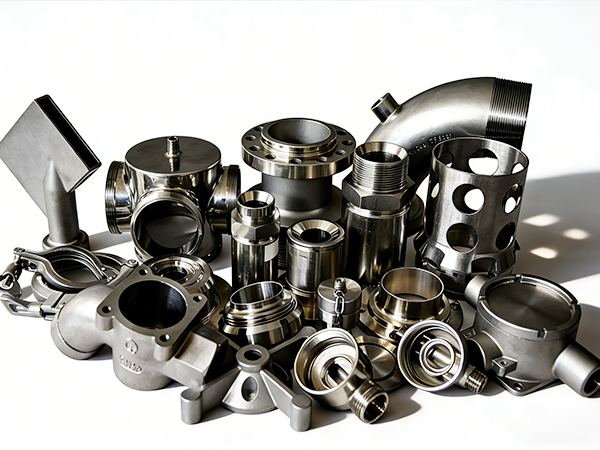
Butt-weld fittings (elbows, tees, reducers)
Forged threaded and socket-weld fittings
High-pressure flanges
Specialty alloy fittings for critical systems
Welded connections are generally preferred for high-pressure systems due to superior sealing performance.
Design Considerations for HTHP Systems
Wall Thickness and Pressure Rating
Thicker walls provide higher pressure resistance
Must comply with ASME pressure classes
Stress Analysis
Consider thermal expansion and contraction
Evaluate mechanical stress under pressure cycles
Use engineering simulation when necessary
Flow Design Optimization
Smooth transitions reduce turbulence
Avoid sharp bends where possible
Use 45° elbows instead of 90° elbows in critical systems
Sealing Method Selection
Welded joints for permanent high-pressure systems
High-performance threaded connections for moderate pressure
Use proper sealants and gaskets for flange systems
Heat Treatment and Material Processing
Proper heat treatment improves performance:
Normalizing enhances toughness
Quenching and tempering increase strength
Solution treatment improves corrosion resistance (stainless steels)
Heat treatment ensures stable microstructure under HTHP conditions.
Common Failure Risks in HTHP Systems
Creep deformation at high temperature
Fatigue failure due to pressure cycling
Stress corrosion cracking
Erosion-corrosion from high-velocity fluids
Proper material selection and maintenance reduce these risks.
Industry Standards and Compliance
HTHP pipe fittings must comply with strict international standards:
ASME B16.9 – Butt-weld fittings
ASME B16.11 – Forged fittings
ASME B31.3 – Process piping systems
ASTM A105 / A182 / A335 – Material specifications
API 6A – High-pressure oil and gas equipment
NACE MR0175 – Sour service environments
Best Practices for Selection
Match material to temperature and pressure conditions
Prefer welded fittings for critical high-pressure lines
Consider corrosion resistance alongside mechanical strength
Ensure compatibility with existing pipeline systems
Follow engineering design codes strictly
Conclusion
Selecting pipe fittings for high-temperature and high-pressure environments requires careful consideration of material properties, mechanical strength, thermal stability, and industry standards. Alloy steels, stainless steels, and nickel-based alloys each serve specific roles depending on the severity of operating conditions.
By applying proper design principles and material selection strategies, engineers can ensure safe, efficient, and long-lasting performance in the most demanding industrial environments.
References
ASME B31.3 – Process Piping Code
ASME B16.9 – Factory-Made Wrought Buttwelding Fittings
ASTM A105 / A182 / A335 – Material Specifications
API 6A – Specification for Wellhead and Christmas Tree Equipment
Callister, W.D. Materials Science and Engineering, Wiley
 Recommended Products
.jpg)
.jpg)
.jpg)
.jpg)
.jpg) Contact us
Contact us
—— Contact:Mr. Meng
—— Tel:+86 18233783692
—— Email:mengfy001@gmail.com
—— Url:https://www.kiyama-pipefitting.com
—— Address:Cangzhou Economic and Technological Development Zone, Cangzhou City, Hebei Province, China