

NewsDetails
Corrosion Resistance in Industrial Pipe Fittings: Grades 304, 316, and Duplex Compared
author:Kiyama time:2026-06-14 17:07:08 Click:135
Corrosion does not announce itself. It hides inside weld seams, lurks beneath gasket surfaces, and eats away at fittings from the inside out while a system appears perfectly functional on the outside. By the time maintenance crews detect the problem, repair costs have already multiplied. Selecting fittings with appropriate corrosion resistance from the start eliminates this class of failure entirely, yet buyers frequently under-specify material grades because they lack a clear framework for comparison. This article provides that framework.
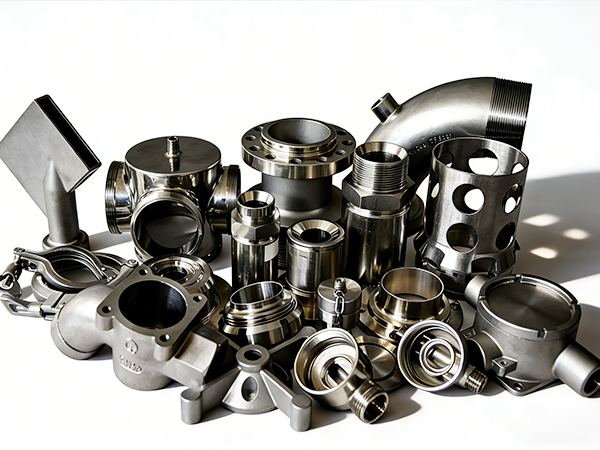
.jpg)
Why Corrosion Resistance Drives Fitting Selection
Industrial pipe fittings operate in environments that would destroy ordinary carbon steel within months. Acidic process fluids, chlorinated cleaning solutions, seawater coolant circuits, and high-temperature steam all attack fitting walls through mechanisms that differ fundamentally in their chemistry and their speed. A fitting that survives thirty years in a brewery can fail within eighteen months in a coastal power plant using identical nominal specifications.
The economic consequence of corrosion extends beyond fitting replacement. unplanned shutdowns for emergency repairs cost far more than the fittings themselves. Contaminated product batches caused by localized corrosion deposits carry regulatory and reputational risk that no procurement line item adequately captures. The manufacturer who specifies premium-grade fittings upfront almost always comes out ahead on total cost of ownership.
Grade 304: The Workhorse With Limitations
Grade 304 stainless steel delivers excellent performance across a broad range of benign environments. Its chromium content forms a passive oxide layer on the metal surface that resists atmospheric oxidation and handles most neutral pH fluids without breakdown. Food processing plants, pharmaceutical water systems, and ambient-temperature compressed air lines represent the natural habitat for 304 fittings.
The trouble starts when chlorides enter the picture. Even modest chloride concentrations accelerate pitting corrosion in 304, particularly above 50 parts per million. Once a pit initiates, the anodic reaction inside the pit creates a localized chemistry that perpetuates attack even in solutions that would otherwise seem harmless. A factory using 304 elbows in a car wash recirculation loop will face blade-shaped wall thinning at pit sites within two to three operating seasons.
Grade 316: The Molybdenum Advantage
The addition of 2 to 3 percent molybdenum to 316 stainless steel shifts its corrosion performance into a different category. Molybdenum strengthens the passive film against chloride attack and raises the pitting resistance equivalent number (PREN) from roughly 19 for 304 to approximately 24 for standard 316.
That numerical difference translates to tangible field performance improvements. Seawater cooling lines, reverse osmosis permeate piping, and chemical batch tanks with chloride contents above 200 ppm call for 316 as a minimum specification. Marine atmospheric exposure, coastal industrial installations, and any application involving repeated cleaning with chloride-based sanitizers all justify the premium.
Type 316L carries the same corrosion chemistry but with reduced carbon content, limiting carbide precipitation in the heat-affected zone of welds. If your fittings require welding in the field or carry significant weld density in their manufacture, specify 316L rather than standard 316 to preserve corrosion resistance through the welded joint.
Duplex Stainless Steels: Strength Meets Chemistry
Duplex grades such as 2205 and 2304 split the microstructure between austenite and ferrite, producing roughly double the yield strength of conventional austenitic grades. The strength advantage permits thinner walls for equivalent pressure ratings, which reduces material cost per fitting even though the base alloy costs more per kilogram.
PREN values for 2205 approach 33, placing duplex ahead of 316 in chloride pitting resistance while offering mechanical properties closer to ferritic stainless steel. Offshore platforms, subsea flowlines, and high-pressure downhole equipment routinely specify duplex fittings because the strength-to-weight ratio matters at those scales. A competent manufacturer supplying to the oil and gas sector will stock duplex inventory specifically for these applications.
Evaluating Buyer Specifications
When comparing supplier quotations, verify the material test report confirms the actual heat chemistry rather than relying on sales literature alone. Grade 304 and 316 fittings look identical in finished form; only chemical analysis reveals the difference. Request mill certificates from the steel supplier and confirm the manufacturer maintains traceability back to the original heat number.
PREN calculations appear in technical datasheets from reputable producers. Ask for pitting corrosion test data if your service involves chloride-bearing fluids. A supplier unwilling to provide supporting technical documentation should raise questions about their quality assurance practices.
References
Lever, R. and Davies, J., "Pitting Corrosion in Austenitic Stainless Steels: Mechanisms and Prevention," British Corrosion Journal, Vol. 20, No. 2, 1985, pp. 89-95.
Sedriks, A. John, Corrosion of Stainless Steels, 2nd ed., John Wiley & Sons, New York, 1996.
American Society for Testing and Materials, ASTM A240/A240M Standard Specification for Chromium and Chromium-Nickel Stainless Steel Plate, Sheet, and Strip for Pressure Vessels, ASTM International, 2022.
International Organization for Standardization, ISO 3653-2:2018 Stainless Steels — Part 2: Chemical Composition and Corrosion Properties, ISO, 2018.
 Recommended Products
.jpg)
.jpg)
.jpg)
.jpg)
.jpg) Contact us
Contact us
—— Contact:Mr. Meng
—— Tel:+86 18233783692
—— Email:mengfy001@gmail.com
—— Url:https://www.kiyama-pipefitting.com
—— Address:Cangzhou Economic and Technological Development Zone, Cangzhou City, Hebei Province, China