
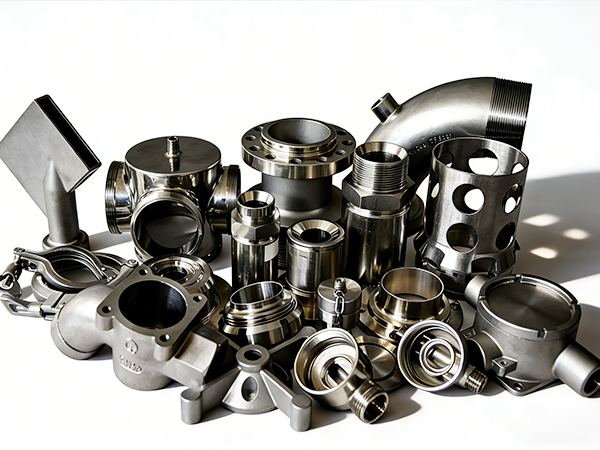

NewsDetails
Elbow Tee Reducer Pipe Fittings Installation Guide – Best Practices for Welded and Threaded Systems
author:Kiyama time:2026-07-07 10:14:20 Click:171
Proper installation of pipe fittings directly affects system performance, reliability, and maintenance requirements. Even high-quality fittings from reputable suppliers can fail prematurely if installed incorrectly. This guide covers installation best practices for stainless steel elbows, tees, reducers, and related fittings in industrial piping systems, helping ensure long-term reliability and leak-free operation.
Pre-Installation Inspection and Storage Practices
Before installation, fittings should be inspected for damage, contamination, or dimensional non-conformance. Visual examination identifies surface defects such as cracks, pits, or inclusions. Dimensional verification using calipers, gauges, or coordinate measuring equipment confirms that fittings match specified dimensions and standards. Material certification should be reviewed to ensure correct grade and heat number traceability before fittings are accepted into inventory.
Fitings should be stored properly before installation—clean, dry conditions prevent contamination or corrosion. For stainless steel fittings, plastic caps or bags protect machined surfaces and threads from damage and contamination. Carbon steel fittings may require oil coating or desiccant packaging for corrosion protection during storage. Site storage should prevent mixing of different material grades, which could lead to accidental installation of incorrect materials. Good suppliers provide clear labeling and packaging to facilitate proper identification, handling, and storage practices.
Welding Preparation and Fit-Up for Quality Welds
Welded connections require careful preparation to ensure high-quality, defect-free welds. End preparation—beveling, facing, and cleaning—ensures proper weld geometry and full fusion at the joint. Stainless steel fittings must be cleaned of contaminants such as oil, grease, paint, or chalk marks before welding. These contaminants can cause porosity, carburization, or cracking in the weld and heat-affected zone, compromising both strength and corrosion resistance.
Fit-up alignment affects weld quality and system performance. Misalignment creates stress concentrations and flow turbulence that can cause erosion or premature failure. Pipe alignment clamps or internal line-up clamps help achieve proper alignment before tack welding. Root gap and alignment should be verified before proceeding with the welding sequence. Experienced fitters understand how to manage thermal expansion during welding to minimize distortion. For critical services, fit-up inspection by quality personnel ensures compliance with welding procedure specifications and prevents costly rework.
Welding Techniques for Stainless Steel Fittings
Stainless steel welding requires techniques that preserve corrosion resistance. TIG (GTAW) welding is preferred for root passes and thin materials due to precise heat control and clean welds. Filler metal should match or slightly overalloy compared to the base material. For SS316L fittings, ER316L filler metal is typical. Low carbon filler metals minimize sensitization risk in the heat-affected zone, maintaining corrosion resistance in the welded joint.
Back purging with argon protects the weld root from oxidation during welding. Without back purging, the root pass develops oxide scale that can flake off and contaminate the process fluid or create corrosion initiation sites. Purge gas should be maintained until the root pass cools below approximately 300°C. Welding parameters—current, voltage, travel speed, and heat input—must conform to the qualified welding procedure specification. Post-weld passivation restores the protective chromium oxide layer on the heat-tinted area adjacent to the weld, ensuring continued corrosion resistance in the welded area.
Threaded and Socket Weld Installations
Threaded fittings are used in low-pressure, non-critical services or for instrument connections where welding is not practical. Proper thread engagement is essential—typically 5-7 full threads for NPT threads. Thread sealant (PTFE tape, pipe dope, or anaerobic sealant) prevents leakage by filling minor imperfections in the thread form. Over-tightening can crack fittings, particularly cast fittings with limited ductility. Threaded connections should be accessible for future disassembly if maintenance requires removal, and should be installed with appropriate tools to avoid damaging the fitting body.
Socket weld fittings provide stronger connections than threaded fittings and are used in higher-pressure services. A gap (typically 1/16 to 1/8 inch) must be left between the pipe end and the socket shoulder to allow for thermal expansion and prevent weld cracking from constrained expansion. After tack welding, the fillet weld is completed around the entire circumference. Penetration should be 100% of the pipe wall thickness for pressure containment. Radiographic or ultrasonic examination may be specified for critical socket weld joints in high-pressure or hazardous service to verify weld quality and ensure long-term reliability.
Support and Alignment Considerations for System Integrity
Piping systems require proper support to prevent excessive stress on fittings and welds. Support spacing depends on pipe diameter, wall thickness, material, and contents weight. Elbows and tees create stress concentrations—supports should be positioned to minimize bending moments on these fittings. Expansion loops or flexible connectors accommodate thermal expansion and contraction, preventing excessive stress that could cause fitting failure or weld cracking over time.
Hanger and support selection should consider load type (dead weight, thermal, wind, seismic) and pipe movement. Rigid supports restrain movement, while spring hangers or expansion joints allow controlled movement. Stainless steel piping should not be supported directly on carbon steel structures without insulation or non-conductive pads to prevent galvanic corrosion. Experienced piping engineers can review support arrangements to ensure compliance with applicable codes and standards such Standards such as ASME B31.3 for process piping. Proper support design prevents premature failures and extends system life.
Post-Installation Testing and Inspection
After installation, piping systems undergo testing to verify integrity before being placed in service. Hydrostatic testing with water is common for most services. Test pressure is typically 1.5 times the design pressure, held for a specified duration while inspecting for leaks. Pneumatic testing with air is used when water could cause damage or freezing. Pneumatic testing requires additional safety precautions due to stored energy in compressed gas systems—failures during pneumatic testing can be catastrophic and require special procedures and safety measures.
Non-destructive examination of welds may be required depending on service classification. Radiographic testing, ultrasonic testing, magnetic particle testing, or liquid penetrant testing verify weld quality per accepted standards. Documentation of testing and inspection forms part of the system record. Turnover packages including material certifications, weld maps, test reports, and as-built drawings provide traceability and support future maintenance activities. Selecting suppliers who understand installation requirements and can provide technical support during construction adds value beyond product supply and helps ensure successful project completion.
References
ASME B31.3 - Process Piping
AWS D10.6 - Recommended Practices for Gas Tungsten Arc Welding
American Welding Society - Welding Handbook
American Petroleum Institute - API 570 Piping Inspection Code
National Board of Boiler and Pressure Vessel Inspectors - NBIC
 Recommended Products
.jpg)
.jpg)
.jpg)
.jpg)
.jpg) Contact us
Contact us
—— Contact:Mr. Meng
—— Tel:+86 18233783692
—— Email:mengfy001@gmail.com
—— Url:https://www.kiyama-pipefitting.com
—— Address:Cangzhou Economic and Technological Development Zone, Cangzhou City, Hebei Province, China