

NewsDetails
Flange Pipe Fittings Manufacturing and Specifications – Comprehensive Guide
author:Kiyama time:2026-07-10 10:19:16 Click:82
Flange pipe fittings provide removable connections in piping systems, enabling maintenance, inspection, and system modification. Flanges must meet dimensional standards, pressure ratings, and material specifications to ensure compatibility and safety. This guide examines flange manufacturing processes, specification standards, and selection criteria for industrial buyers and engineering teams specifying piping systems.
Flange Types and International Standards
Flanges are categorized by face type, connection method, and pressure rating. Common face types include raised face (RF), flat face (FF), ring-type joint (RTJ), and tongue-and-groove. Connection methods include weld neck, slip-on, socket weld, threaded, and lap joint. Each type serves specific applications—weld neck flanges provide strong, permanent connections for high-pressure service, while slip-on flanges offer easier alignment and installation for lower-pressure systems with appropriate design factors.
Major flange standards include ASME B16.5 (North America), EN 1092 (Europe), DIN standards (Germany), JIS B2220 (Japan), and GB/T 9112 (China). These standards specify dimensions, drill patterns, pressure ratings, and material requirements. Suppliers serving international markets typically maintain tooling and inventory for multiple standards. Buyers should specify the required standard early in the procurement process to ensure proper fit with existing system components and avoid compatibility issues during installation.
Manufacturing Processes for Flange Production
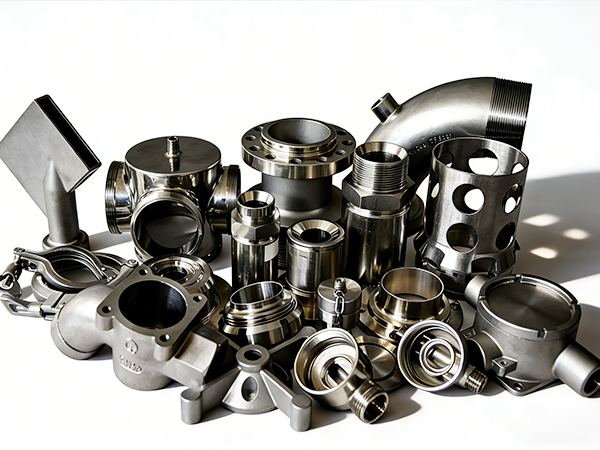
Flanges are manufactured through forging, casting, or plate cutting processes. Forged flanges provide the best mechanical properties and are preferred for high-pressure, high-temperature, or cyclic loading applications. The forging process refines grain structure and eliminates casting defects such as porosity or inclusions. Cast flanges offer cost advantages for complex geometries or large diameters where forging would be impractical due to equipment limitations or cost considerations.
Investment casting produces flanges with intricate geometries such as orifice flanges with integrated tap connections. Plate-cut flanges are economical for low-pressure, non-critical applications where full forging properties are not required. Regardless of manufacturing method, flange facing must be machined to achieve proper surface finish and flatness. Raised face height, serration pattern (for RF flanges), and surface roughness all affect gasket sealing performance and must be controlled to ensure leak-free operation under pressure.
Pressure Ratings and Temperature Considerations
Flange pressure ratings are defined by standards such as ASME B16.5, which specifies Class 150, 300, 600, 900, 1500, and 2500 ratings. The actual pressure capability depends on both the class rating and the material's allowable stress at operating temperature. ASME B16.5 includes pressure-temperature rating tables that must be consulted for proper flange selection. Engineers should never assume that a Class 300 flange can handle 300 psi at all temperatures—the allowable pressure decreases significantly at elevated temperatures.
For example, a Class 150 flange in SS316 has a pressure rating of approximately 140 psi at 100°F but only 95 psi at 500°F due to reduced material strength at elevated temperature. Cryogenic applications require special consideration—flanges must be suitable for low-temperature service, and bolting materials must maintain toughness at design temperature. Suppliers with experience in pressure piping systems can provide guidance on flange rating selection for specific operating conditions and help prevent over-pressure failures.
Material Selection for Flange Applications
Flange material must be compatible with the piping system and service environment. Carbon steel flanges are common for water, steam, and general industrial service. Stainless steel flanges (SS304, SS316, SS316L) are used where corrosion resistance is required. Alloy steel flanges (chrome-moly) serve high-temperature, high-pressure applications in power and petrochemical plants. The selection should consider not only the process fluid but also external environment, insulation requirements, and fire safety considerations.
For corrosive services, flange material should match or be compatible with adjacent piping. Galvanic corrosion can occur if dissimilar metals are connected—for example, carbon steel flanges connected to stainless steel piping may require insulation kits or dielectric flanges to prevent accelerated corrosion of the carbon steel. Flange facing material may differ from the flange body—tightening rings, gasket contact surfaces, or cladding can use corrosion-resistant alloys even when the flange body is carbon steel. Discussing material compatibility with experienced suppliers prevents costly corrosion problems in service.
Inspection and Testing Requirements for Quality Assurance
Flange inspection includes dimensional verification, surface examination, and non-destructive testing. Bolt hole spacing, flange face flatness, and bore diameter are checked against standard tolerances. Surface examination identifies cracks, laps, or inclusions that could compromise performance. Magnetic particle testing (MT) or liquid penetrant testing (PT) detects surface discontinuities in ferrous or non-ferrous flanges respectively. For critical service, radiographic testing may be specified to examine internal soundness.
Ultrasonic testing can detect internal defects in forged flanges. Pressure testing—either pneumatic or hydrostatic—verifies integrity. Documentation includes material test reports, heat treatment records, NDT reports, and pressure test certificates. Suppliers certified to ISO 9001 or specific industry standards (PED, API, etc.) maintain documented procedures for all inspection and testing activities. Requesting sample inspection reports from potential suppliers provides insight into their quality system implementation and documentation practices.
Selecting a Reliable Flange Supplier
Flange procurement involves multiple considerations beyond price. Material certification and traceability are essential—each flange should be traceable to the original material melt through heat numbers marked on the flange and documented in the material test report. Dimensional accuracy affects gasket sealing and system integrity—flanges that do not conform to standard dimensions can cause leaks or require field modification, increasing installation cost and delay.
Delivery performance matters, particularly for maintenance, repair, and operations purchases where downtime is costly. Suppliers with local inventory or short production lead times provide valuable responsiveness for emergency orders. Technical support capability—including assistance with specification interpretation, material selection, and compatibility issues—adds value beyond the product itself. Evaluating suppliers based on these comprehensive criteria, rather than price alone, leads to better long-term outcomes and reduced total cost of ownership for flange procurement.
References
ASME B16.5 - Pipe Flanges and Flanged Fittings
EN 1092-1 - Flanges and their joints - Circular flanges for pipes
API 6A - Specification for Wellhead and Christmas Tree Equipment
American Society of Mechanical Engineers - B16 Series Flange Standards
International Organization for Standardization - ISO 7005 Flanges
 Recommended Products
.jpg)
.jpg)
.jpg)
.jpg)
.jpg) Contact us
Contact us
—— Contact:Mr. Meng
—— Tel:+86 18233783692
—— Email:mengfy001@gmail.com
—— Url:https://www.kiyama-pipefitting.com
—— Address:Cangzhou Economic and Technological Development Zone, Cangzhou City, Hebei Province, China