

NewsDetails
OEM Custom Stainless Steel Pipe Fittings – Design, Manufacturing, and Supply Chain Management
author:Kiyama time:2026-07-19 20:23:33 Click:156
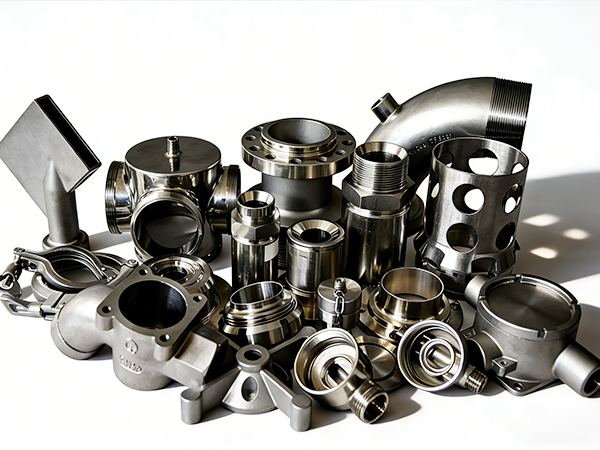
Original Equipment Manufacturers often require custom stainless steel pipe fittings that differ from standard catalog items. Custom fittings may involve unique geometries, special materials, integrated features, or proprietary designs that provide competitive advantage. This article examines the custom fitting manufacturing process and what OEMs should consider when selecting a manufacturing partner for custom stainless steel components and fittings.
Design and Engineering Collaboration for Optimal Results
Custom fitting projects begin with design collaboration between the OEM and the manufacturer. The OEM provides functional requirements, space constraints, performance specifications, and quantity expectations. The manufacturer contributes manufacturability input—suggesting design modifications that reduce cost or improve quality while maintaining functionality. This collaborative approach, sometimes called Design for Manufacturability, prevents costly redesigns and delays during production ramp-up.
Engineering deliverables include 3D models, 2D drawings with critical dimensions and tolerances, material specifications, and surface finish requirements. Prototyping may be used to validate the design before committing to production tooling. Rapid prototyping techniques such as 3D printing can produce concept models for form-fit verification, while CNC machined prototypes from production material provide functional validation. Manufacturers with in-house engineering teams can respond quickly to design changes and provide valuable feedback throughout the development process, reducing time-to-market for new products.
Tooling and Mold Development for Investment Casting
Investment casting requires metal tooling (dies) to produce wax patterns. Tooling development represents a significant portion of custom fitting startup costs. Aluminum tooling is economical for low to medium production volumes, while steel tooling provides longer life for high-volume production. Tool design must account for shrinkage—stainless steel shrinks approximately 1.5-2% during solidification and cooling, so the wax pattern and ceramic mold must be oversized to achieve final dimensions within specified tolerances.
Multiple cavity tooling produces several parts per wax pattern injection cycle, improving production efficiency and reducing piece cost. However, more cavities increase tool complexity and initial cost. The optimal cavity count depends on expected production volume, part size, and required cycle time. Experienced toolmakers understand how to balance these factors to minimize piece cost while maintaining quality. Tooling maintenance is also important—worn tooling produces out-of-tolerance parts and requires periodic refurbishment or replacement. Selecting suppliers with in-house tooling capability ensures better control over tooling quality and faster response to tooling issues.
Material Selection for Custom Applications and Environments
Custom fittings may require materials beyond standard SS304 or SS316. High-temperature applications might use SS321 or SS347 (stabilized grades) to prevent sensitization. Highly corrosive services could require superaustenitic stainless steels, duplex stainless steels, or even nickel alloys such as Hastelloy or Inconel. Material selection should consider not only corrosion resistance but also mechanical properties, weldability, and total cost of ownership over the expected service life.
For food, pharmaceutical, or biotech applications, material selection must consider cleanability and extractables that could contaminate the process. Low-carbon grades are preferred for welded assemblies to prevent sensitization. Material test reports should document not only major alloying elements but also trace elements that could affect performance or regulatory compliance. Suppliers with broad material experience can recommend cost-effective alternatives that meet performance requirements without over-specifying, helping OEMs optimize product cost while maintaining quality and regulatory compliance.
Production Process Control and Quality Assurance
Custom fitting production requires rigorous process control to ensure consistency across batches. Wax injection parameters—pressure, temperature, and hold time—affect wax pattern density and dimensional accuracy. Ceramic shell building involves controlling slurry viscosity, stucco size, and drying conditions to achieve uniform shell properties. De waxing method and temperature affect shell integrity and casting quality. All these parameters must be controlled and documented to ensure consistent quality.
Molten metal pouring temperature, pouring rate, and mold preheat temperature influence filling and solidification. CNC machining parameters must be controlled to achieve specified surface finish and tolerances. Statistical process control tracks critical dimensions across production runs, enabling early detection of process drift. Manufacturers with ISO 9001-certified quality systems maintain documented procedures for all these process steps, with records traceable to individual production batches. This traceability provides confidence in quality and supports customer quality audits and regulatory inspections.
Supply Chain Management and Delivery Performance
Custom fitting supply involves coordination across multiple process steps—tooling, casting, machining, heat treatment, surface treatment, and inspection. Lead time depends on complexity, volume, and current factory load. Experienced suppliers provide realistic lead time estimates and communicate proactively about potential delays. Inventory management strategies such as safety stock or consignment inventory can mitigate lead time risks for recurring production orders and ensure uninterrupted supply for OEM production lines.
Packaging and shipping require care for custom fittings that may not have standard packaging solutions. Machined surfaces should be protected from damage during transit. Stainless steel fittings should be packaged to prevent contact with carbon steel or contaminants that could cause corrosion. Export packaging may require fumigated wooden crates, moisture barrier bags, or desiccant packs depending on shipping method and destination climate. Suppliers with experience in international shipping understand these requirements and can provide appropriate packaging solutions that prevent damage and ensure parts arrive in perfect condition.
References
Investment Casting Institute - Investment Casting Handbook
American Foundry Society - Metal Casting Design Handbook
ISO 9001:2015 - Quality management systems
Society of Manufacturing Engineers - Design for Manufacturability
Original Equipment Suppliers Association - Supply Chain Guidelines
 Recommended Products
.jpg)
.jpg)
.jpg)
.jpg)
.jpg) Contact us
Contact us
—— Contact:Mr. Meng
—— Tel:+86 18233783692
—— Email:mengfy001@gmail.com
—— Url:https://www.kiyama-pipefitting.com
—— Address:Cangzhou Economic and Technological Development Zone, Cangzhou City, Hebei Province, China