

NewsDetails
Stainless Steel Pipe Fittings Manufacturing Process – Complete Guide for Industrial Buyers
author:Kiyama time:2026-08-11 11:08:15 Click:180
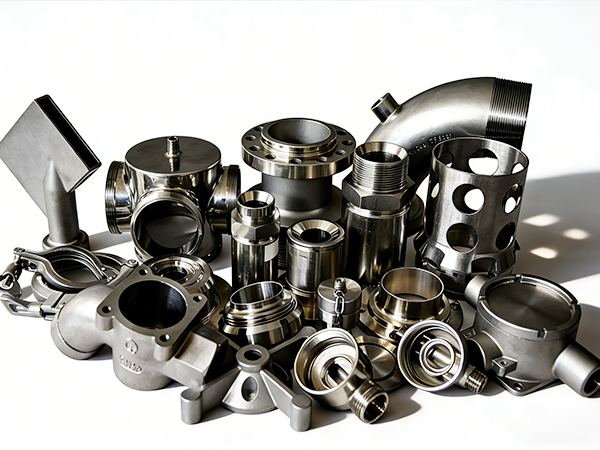
Stainless steel pipe fittings form the critical connection points in fluid handling systems across chemical processing, food production, pharmaceutical manufacturing, and marine engineering. For procurement professionals and engineering teams, understanding how these fittings are manufactured provides essential insight into quality differences between suppliers and helps justify appropriate material and process selections that deliver long-term value.
Raw Material Selection Defines Final Quality
The manufacturing journey begins with molten metal composition control. Reputable factories exclusively use certified stainless steel billets from recognized mills with documented chemical composition. The two most specified grades—SS304 and SS316—differ primarily in molybdenum content, which provides enhanced pitting resistance in chloride environments. Material test reports should accompany every raw material batch, documenting exact chemical composition including chromium (18-20%), nickel (8-12% for 304, 10-14% for 316), and carbon content controlled below 0.08% for standard grades or 0.03% for L-grades.
Experienced manufacturers maintain material traceability from mill certificate to finished fitting. This traceability becomes essential for regulated industries where documentation audits occur routinely. When evaluating potential suppliers, always request sample material test reports to verify that traceability systems are actually implemented rather than merely claimed in marketing materials.
Investment Casting: Preferred Process for Complex Geometries
Investment casting, also called lost wax casting, dominates stainless steel pipe fitting production because it accommodates complex internal geometries that would be impossible to machine from bar stock. The process sequence involves creating a wax pattern using aluminum or steel tooling, assembling patterns onto a wax tree, coating with ceramic slurry to build a shell, dewaxing to create a hollow ceramic mold, pouring molten steel, and breaking the ceramic away after cooling.
Silica sol binding produces finer surface finish compared to ethyl silicate processes. For pipe fittings requiring pressure tightness, this surface quality directly affects leakage rates at sealed joints. Dimensional tolerances of CT5-CT6 per ISO 8062 are typical, though critical dimensions like thread pitch diameters require subsequent CNC machining regardless of casting accuracy. Leading manufacturers use simulation software to predict solidification patterns and optimize gating design before cutting tooling.
CNC Machining Refines Critical Surfaces
Cast fittings emerge from the ceramic shell with parting line flash and gate remnants. CNC machining removes these imperfections and refines surfaces that affect sealing performance. Threaded fittings undergo thread milling or chasing to achieve proper form per ASME B1.20.1 or ISO 7-1 standards. Flange faces receive facing cuts to ensure flatness within 0.1 mm total indicator reading. Bolt hole patterns must align with relevant standards—ASME B16.5 for North American markets, EN 1092 for European projects, JIS B2220 for Japanese specifications.
Modern machining centers with 4-axis capability complete complex fittings in fewer setups, reducing cumulative positioning errors. Suppliers who have invested in modern CNC equipment demonstrate commitment to dimensional consistency across production runs. When visiting a potential supplier's factory, observing the age and condition of CNC equipment provides valuable insight into their quality capability and technological level.
Heat Treatment Restores Corrosion Resistance
After casting and machining, stainless steel fittings may require solution annealing to dissolve carbides that precipitate at grain boundaries during cooling. This sensitization makes stainless steel susceptible to intergranular corrosion in service. Solution annealing involves heating to 1040-1100°C followed by rapid quenching in water or gas. The rapid cooling prevents carbide re-precipitation, restoring the protective chromium oxide layer continuity throughout the material.
For welded assemblies or fittings that will be field-welded, using low-carbon grades (SS304L, SS316L) eliminates sensitization concerns entirely. Many specification documents now default to L-grades for this reason, even when high-temperature service is not anticipated. Discussing material grade selection with experienced suppliers prevents over-specification that increases cost without adding functional value.
Surface Treatment and Passivation
As-cast stainless steel surfaces contain embedded contaminants from the ceramic mold. Pickling in nitric-hydrofluoric acid mixtures removes these contaminants and restores the passive layer. Citric acid passivation provides an environmentally preferable alternative that achieves similar corrosion resistance restoration. For hygienic applications, electropolishing removes surface iron particles and creates a smooth, cleanable finish with Ra values below 0.8 micrometers.
Surface finish specification should match application requirements. Industrial pipe fittings in chemical service perform well with pickled and passivated surfaces. Food and pharmaceutical systems require electropolished surfaces to prevent product adhesion and facilitate cleaning-in-place procedures. Understanding these requirements helps buyers avoid paying for surface treatments that provide no functional benefit in their specific application.
Quality Control and Testing Regimes
Comprehensive quality control involves multiple inspection stages. Incoming material inspection verifies chemistry and mechanical properties. In-process inspection monitors critical dimensions during machining using statistical process control. Final inspection includes pressure testing (hydrostatic or pneumatic), dimensional verification using coordinate measuring machines, surface roughness measurement for hygienic fittings, and visual examination for surface defects.
Non-destructive testing methods include dye penetrant testing for surface cracks, radiographic testing for internal porosity, and ultrasonic testing for wall thickness verification. The extent of testing should match application criticality—nuclear or pharmaceutical applications require extensive documentation and testing, while general industrial services may only need basic pressure testing and dimensional spot checks. Reputable suppliers provide clear guidance on appropriate inspection levels.
Selecting a Manufacturing Partner
When evaluating stainless steel pipe fitting suppliers, consider production capability, quality system certification, material traceability, testing equipment, and delivery performance. Factories with in-house capabilities for casting, machining, heat treatment, and testing maintain better process control compared to those relying entirely on subcontractors. Sample evaluation before placing production orders provides tangible evidence of quality capability and helps verify that the supplier's actual output matches their marketing claims.
Established manufacturers with decades of operation have refined their processes to minimize defects and optimize dimensional consistency. Companies demonstrating long-term commitment to quality and continuous improvement typically deliver better value over time. When sourcing stainless steel pipe fittings for critical applications, prioritizing supplier capability and experience over initial price usually delivers better lifecycle value and reduces total cost of ownership.
References
ASTM A351/A351M - Standard Specification for Castings, Austenitic, for Pressure-Containing Parts
ISO 9001:2015 - Quality management systems — Requirements
ASME B16.5 - Pipe Flanges and Flanged Fittings
Investment Casting Institute - Casting Design Guidelines
American Foundry Society - Metal Casting Fundamentals
 Recommended Products
.jpg)
.jpg)
.jpg)
.jpg)
.jpg) Contact us
Contact us
—— Contact:Mr. Meng
—— Tel:+86 18233783692
—— Email:mengfy001@gmail.com
—— Url:https://www.kiyama-pipefitting.com
—— Address:Cangzhou Economic and Technological Development Zone, Cangzhou City, Hebei Province, China