

NewsDetails
Stainless Steel Pipe Fittings Manufacturing Process
author:Kiyama time:2026-05-29 18:59:00 Click:191
The Manufacturing Process Behind Stainless Steel Pipe Fittings
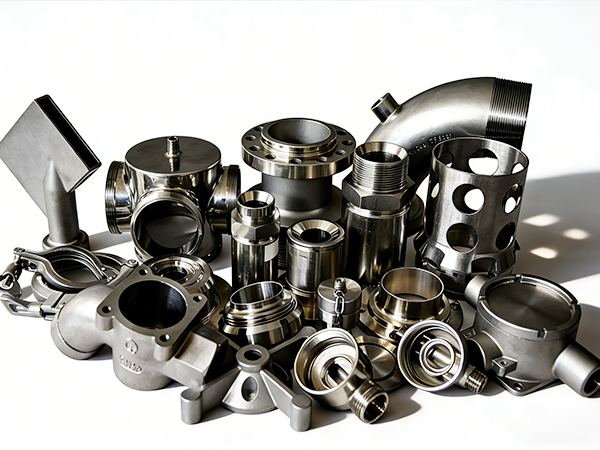
Stainless steel pipe fittings serve as critical components in fluid transfer systems across countless industries. The journey from raw material to finished fitting involves precise craftsmanship, advanced technology, and rigorous quality control. Understanding this process helps buyers appreciate the value that experienced manufacturers bring to every product.
Raw Material Selection and Preparation
Manufacturers begin by selecting appropriate stainless steel alloys based on the intended application. Type 304 remains the most common choice for general-purpose fittings, offering excellent corrosion resistance and good formability. For more demanding environments, type 316 and 316L provide superior resistance to chlorides and high temperatures. A reputable factory sources materials from certified mills that provide complete traceability documentation.
The melting process takes place in induction furnaces or electric arc furnaces under controlled atmospheres. Proper temperature management ensures complete alloying element dissolution and minimizes oxide formation. After melting, the molten metal undergoes chemical analysis to verify composition before casting begins.
Investment Casting: The Precision Foundation
Investment casting, also known as lost-wax casting, forms the foundation for complex fitting geometries. The process starts with pattern creation using wax or thermoplastic materials. Skilled technicians inject the pattern into precision-machined dies, ensuring consistent wall thickness and dimensional accuracy.
Workers coat the patterns with multiple layers of refractory slurry, building up a ceramic shell that withstands molten metal temperatures. After the shell cures, workers melt out the pattern material, leaving a hollow cavity. This technique produces fittings with excellent surface finish and tight dimensional tolerances, typically within ±0.005 inches for critical dimensions.
The supplier pours molten stainless steel into the preheated ceramic shells using gravity or pressure casting. After solidification, workers break away the ceramic mold material to reveal the rough casting. This method eliminates the need for extensive machining on complex internal passages and reduces material waste compared to bar-stock machining.
Machining Operations
CNC machining centers transform cast fittings into dimensionally precise components ready for installation. Modern factories employ multi-axis CNC lathes and milling machines that operate with tolerances as tight as ±0.0005 inches. Programming teams develop custom tool paths that maximize material removal efficiency while maintaining surface finish requirements.
Thread cutting represents a critical machining operation. Fittings must meet exacting thread specifications—either NPT (National Pipe Taper) per ASME B1.20.1 or BSPT (British Standard Pipe Taper) standards. Automated thread inspection systems verify pitch diameter, thread angle, and taper angle to ensure leak-free connections.
Additional operations include facing, boring, grooving, and custom feature machining based on customer specifications. A well-equipped factory maintains extensive tooling inventories to handle diverse fitting configurations without lengthy setup delays.
Quality Testing and Certification
Every reputable manufacturer implements comprehensive quality control procedures throughout production. Initial inspections occur at each process stage, from raw material receipt through final packaging. Dimensional verification uses coordinate measuring machines (CMM) that capture thousands of data points per fitting.
Non-destructive testing methods detect internal defects without damaging the component. Liquid penetrant testing reveals surface cracks, while ultrasonic examination identifies internal discontinuities. Hydrostatic testing subjects fittings to pressures exceeding their rated working pressure by a specified safety factor—typically 1.5 times the rating.
Material certification documents confirm alloy composition and mechanical properties. Mills supply material test reports (MTRs) listing carbon, chromium, nickel, molybdenum, and other element percentages alongside tensile strength, yield strength, and elongation values. Factories provide test certificates conforming to EN 10204 3.1 or 3.2, giving buyers complete confidence in material traceability. Third-party inspection agencies such as SGS, Bureau Veritas, and TUV offer independent verification when project specifications demand it.
Heat Treatment and Metallurgical Properties
Heat treatment plays a vital role in achieving the mechanical properties specified by ASTM and ASME standards. Solution annealing heats stainless steel castings to temperatures between 1,900 and 2,050 degrees Fahrenheit, holding at temperature long enough to dissolve carbide precipitates, followed by rapid quenching in water or air. This process restores the uniform austenitic microstructure that gives stainless steel its characteristic corrosion resistance.
For fittings that require higher strength, manufacturers may employ age-hardening treatments on precipitation-hardening grades such as 17-4 PH. Stress relieving after welding or heavy machining removes residual stresses that could contribute to stress corrosion cracking in chloride-containing service environments.
Surface Finishing and Packaging
Final surface treatments enhance corrosion resistance and appearance. Pickling removes embedded scale and restores the passive chromium oxide layer essential for corrosion resistance. Passivation treatments using nitric or citric acid solutions further improve the protective surface layer.
Packaging procedures protect fittings during shipping and storage. Plastic end caps prevent contamination and damage to thread surfaces. Individual bagging or bulk packaging options accommodate various customer requirements. Clear labeling identifies fitting type, size, material, and heat number for complete traceability.
References
ASM International. (1990). ASM Handbook, Volume 15: Casting. ASM International.
Kalpakjian, S., & Schmid, S. R. (2017). Manufacturing Engineering and Technology. Pearson Education.
ASME B31.3-2022: Process Piping. The American Society of Mechanical Engineers.
ISO 15590-1:2019: Petroleum and natural gas industries — Induction-bent, processed and straightenable thin-wall pipe. International Organization for Standardization.
 Recommended Products
.jpg)
.jpg)
.jpg)
.jpg)
.jpg) Contact us
Contact us
—— Contact:Mr. Meng
—— Tel:+86 18233783692
—— Email:mengfy001@gmail.com
—— Url:https://www.kiyama-pipefitting.com
—— Address:Cangzhou Economic and Technological Development Zone, Cangzhou City, Hebei Province, China